Anthropic Sent Lawyers, OpenAI Sent a Job Offer: What OpenClaw's OpenAI Deal Means for AI Agents
Clawdbot. Moltbot. OpenClaw. OpenAI employee.
That's the trajectory of Peter Steinberger's AI personal agent project over the course of about three weeks. The guy built a viral AI assistant and was such a fan of Claude that he literally named it after the model — Clawdbot, a pun on "Claude with claws." Anthropic responded with a trademark complaint. OpenAI responded with a job offer. If you're building with Claude daily like I am, that sequence should make you uncomfortable.
OpenClaw and OpenAI: The Acqui-Hire Nobody Should Be Celebrating
The popular narrative right now is that this is a win for open source. Steinberger said he's transferring OpenClaw to a foundation. Sam Altman called him "a genius with many amazing ideas about the future of highly intelligent agents." OpenAI promised to sponsor the foundation. Everyone's happy.
I'm not buying it.
When the creator of a project leaves to work full-time at the world's most-funded AI company, the project doesn't thrive. It stagnates. We've seen this exact movie before. Google paid $2.7 billion for Character.AI's key people in 2024, including co-founders Noam Shazeer and Daniel De Freitas. Character.AI technically still exists. Nobody talks about it as an independent product anymore. Amazon did the same thing with Adept, hiring about 80% of their technical team. Microsoft pulled the same move with Inflection AI.
The pattern is consistent: let the open-source community validate the idea, let the indie developer prove the concept, then absorb the talent. The project gets a "foundation." The founder gets a salary and access to frontier models. The acquiring company gets the mind behind the thing that just captured everyone's attention.
"Foundation" in open source often translates to "maintained by volunteers who have day jobs." Steinberger's full attention is now on building proprietary agents for OpenAI. That's not a win for open source. That's a win for OpenAI's recruiting team.
The Part That Should Bother Every Claude User
I use Claude every single day. Claude Code is my primary development tool. For reasoning and coding, I genuinely believe Anthropic has the best model on the market. I'm not switching.
But Steinberger didn't name his project after Claude by accident. He was a genuine fan of the model. OpenClaw itself is model-agnostic — it works with Claude, GPT, DeepSeek, whatever you throw at it. But the inspiration, the original branding, the community energy? That started with Claude. Steinberger wanted to build something that takes AI capabilities and turns them into real-world action. Calendar management. Flight bookings. Web browsing. Practical, autonomous tasks that regular people care about.
And Anthropic's response to someone building a viral product inspired by their model, branded as a tribute to their brand, was a trademark notice.
Compare that to what OpenAI has been doing. They launched Operator in early 2025, then fully integrated it into ChatGPT as a unified agent that can browse the web, fill out forms, manage your calendar, write documents, and complete multi-step tasks across applications. They've been investing in agentic capabilities for over a year. Hiring Steinberger isn't a random move. It's the latest step in a deliberate strategy.
Anthropic, meanwhile, has Cowork (their desktop agent tool) and the new agent teams feature in Opus 4.6. These are impressive for developers and enterprise users. But ask a non-technical founder "which AI can actually book me a flight and manage my inbox?" and the answer isn't Claude. Not yet.
"I Want to Change the World, Not Build a Company"
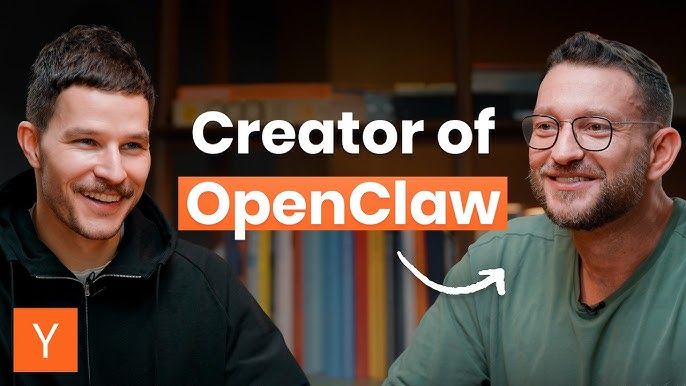
Steinberger explained his reasoning: "What I want is to change the world, not build a large company, and teaming up with OpenAI is the fastest way to bring this to everyone."
Respect the honesty, but let's be real about what this means. He went from independent creator to employee at a company reportedly valued at over $300 billion. "Changing the world" from inside OpenAI means changing it on OpenAI's terms, with OpenAI's priorities, shipping OpenAI's products. The open-source idealism is nice framing, but the guy now has a badge and a desk in San Francisco.
And there's nothing wrong with that. Getting paid well to build at the frontier is a perfectly rational choice. I just wish people would stop packaging it as altruism.
What Anthropic Needs to Do (From Someone Who's Betting on Them)
I'm not writing this as an OpenAI cheerleader. I build my entire practice on Claude. My agents, my tools, my client work. When I say Anthropic has a problem, it's because I have a problem if they fall behind.
Claude is arguably the best foundation model for reasoning and code. Agent teams in Opus 4.6 are genuinely useful. But the personal agent space, the thing where AI stops being a chat window and starts being an assistant that operates in the real world, that's where the next trillion-dollar platform shift happens.
OpenAI just hired the person who proved that concept to a mass audience. They already have a shipped product doing it. They're not waiting.
Anthropic has the model quality. They have the safety research. They have developer loyalty. What they need is to channel all of that into agents that non-developers can point at real-world tasks. Less trademark enforcement, more product ambition.
The Uncomfortable Question
Anthropic needs to decide whether they're a model company or an agent company. OpenAI already answered that question for themselves when they hired Peter Steinberger.
For those of us building on Claude, the model itself isn't the concern. The concern is whether Anthropic will build the agentic infrastructure around it fast enough, or whether we'll be building on the best engine inside a car that nobody's assembling.
The clock started on February 15th. I'll be watching what Anthropic ships next a lot more closely than I'll be watching what Steinberger ships at OpenAI.
AI Strategy Is Not Tool Shopping
Most companies start their AI journey by picking tools. That's backwards. Here's what they should do instead.
Qwen 3.5 Can See Your Screen and Do Your Work. The Agentic AI Era Just Got Real.
Alibaba's Qwen 3.5 brings visual agentic AI to startups. It controls apps, sees screens, and costs 60% less. What founders need to know.